
Rideshare Coverage Guide (May Include Progressive)
Rideshare driving can change how auto insurance should be compared because coverage may differ based on driving status (personal use vs. app on vs. trip in progress). This guide explains what to prepare, what to verify on quote details, and how to compare options fairly using one consistent baseline (ZIP code, limits, deductibles, and vehicle usage). Coverage availability varies by state and provider.
Use the ZIP-based forms below to start a baseline comparison. If you want your comparison set to include Progressive, begin with Progressive quote comparison guide and then confirm rideshare-related terms in the policy documents.
How to Compare Rideshare Coverage
Before comparing quotes, gather: driver’s license, vehicle registration, and any documentation that shows you drive for a rideshare platform (requirements vary by provider). Also write down your typical usage: part-time vs frequent driving, approximate annual mileage, and where the car is garaged overnight.
- Driver’s license
- Vehicle registration
- Rideshare platform documentation (if requested)
When reviewing any rideshare-related quote, verify how the policy treats each driving phase (app off, app on/waiting, en route, trip in progress). Do not assume two quotes are comparable unless the usage assumptions and coverage settings match.
For a side-by-side comparison workflow, you can also review: insurance comparison workflow.
Get Auto Insurance Quotes
Compare quote estimates by ZIP code with the same baseline limits and deductibles.
Explore Home Insurance Options
If bundling is available, compare total annual cost against standalone quotes.
Understanding Rideshare “Phases”
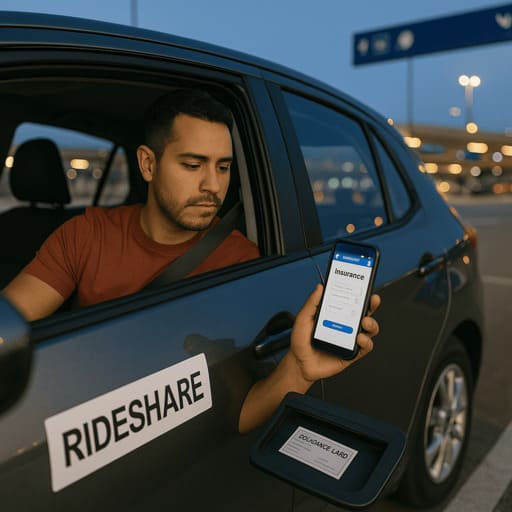
Rideshare coverage can vary by phase. Some personal auto policies may not cover certain app-on situations without an endorsement or a commercial/rideshare add-on. Because rules differ by provider and state, verify the exact wording in the quote details and policy documents.
Also keep your usage description consistent across quotes (how often you drive, typical hours, and mileage). Changing assumptions can make one quote look cheaper even when coverage is not comparable.
| Driving Phase | What to Verify | Notes |
|---|---|---|
| App off (personal use) | Personal auto policy terms | Confirm limits/deductibles match your baseline |
| App on, waiting | Whether the quote includes an endorsement/add-on | This is a common “gap” area—verify in writing |
| En route / trip in progress | How coverage coordinates with platform insurance (if applicable) | Details vary by state/provider—verify terms |
| Roadside & rental | Optional add-ons and limits | Compare add-ons consistently across quotes |
How to Improve Value
Value usually comes from matching coverage to your real risk. Compare baseline limits and deductibles first, then evaluate optional features. If you change deductibles, consider how that affects out-of-pocket costs in a claim.
If you want a ZIP-based comparison workflow, use: auto insurance comparison by ZIP.
Frequently Asked Questions
What is rideshare coverage?
It generally refers to coverage designed to address app-based driving situations that may not be fully covered by a standard personal auto policy. Terms vary by provider and state.
How does rideshare coverage usually work?
It may apply differently depending on whether the app is off, on/waiting, or in-trip. Always verify how each phase is handled on your quote details.
Can rideshare coverage be added to an existing policy?
Some providers offer endorsements or add-ons, while others may require a different policy form. Confirm what is available in your state.
In conclusion: The safest rideshare comparison starts with one baseline, then verifies how each driving phase is covered in writing before choosing a policy.